MoodMaps
What if your map knew how you felt?
- Role
- UX Researcher & Designer
- Timeline
- 10 weeks
- Tools
- Figma, ArcGIS, Miro
- Team
- Solo project
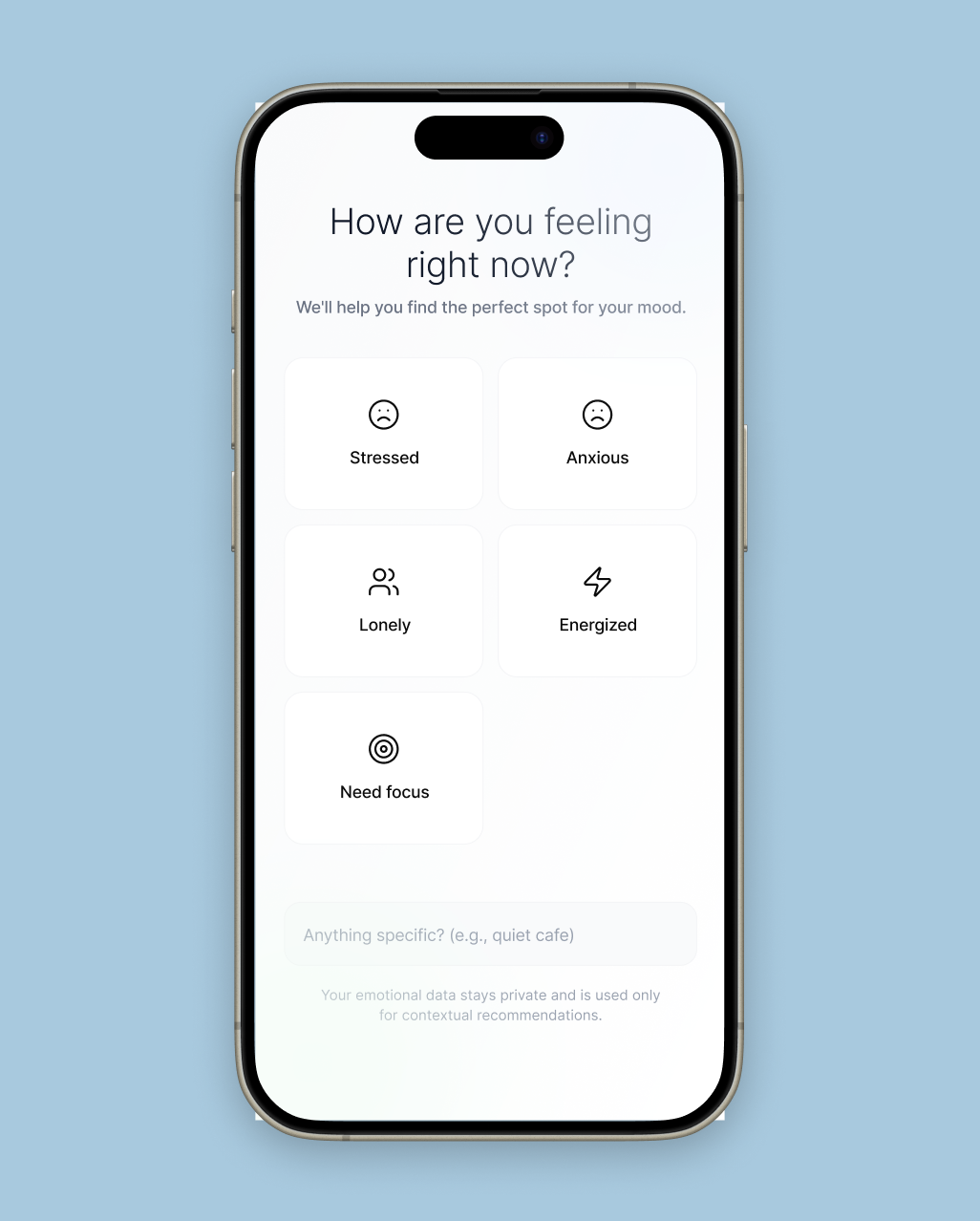
Emotional Onboarding
Select your current state — the system activates relevant GIS layers automatically.
Designing navigation that responds to how people feel, not just where they go.
Urban navigation optimises for speed. MoodMaps explores what happens when it optimises for emotional wellbeing instead.
- ·UX Research & Strategy
- ·Information Architecture
- ·Interaction Design
- ·GIS Data Integration
- ·Prototype & Testing
“How might urban navigation adapt not only to where users need to go, but to how they feel while getting there?”
Infrastructure without
emotional context
Urban environments shape how we feel as we move through them. Noise, crowd density, lighting and green space directly affect stress and cognitive load. Yet most navigation systems treat space as emotionally neutral terrain — optimising for speed, never for feeling.
Translating GIS
into lived experience
Cities already collect environmental data. MoodMaps explores how these datasets — noise levels, pedestrian density, lighting, green space — can inform real-time spatial recommendations tailored to emotional state.
Four features, one emotional layer
Emotional Onboarding
Users select their current state. Relevant GIS layers activate automatically.
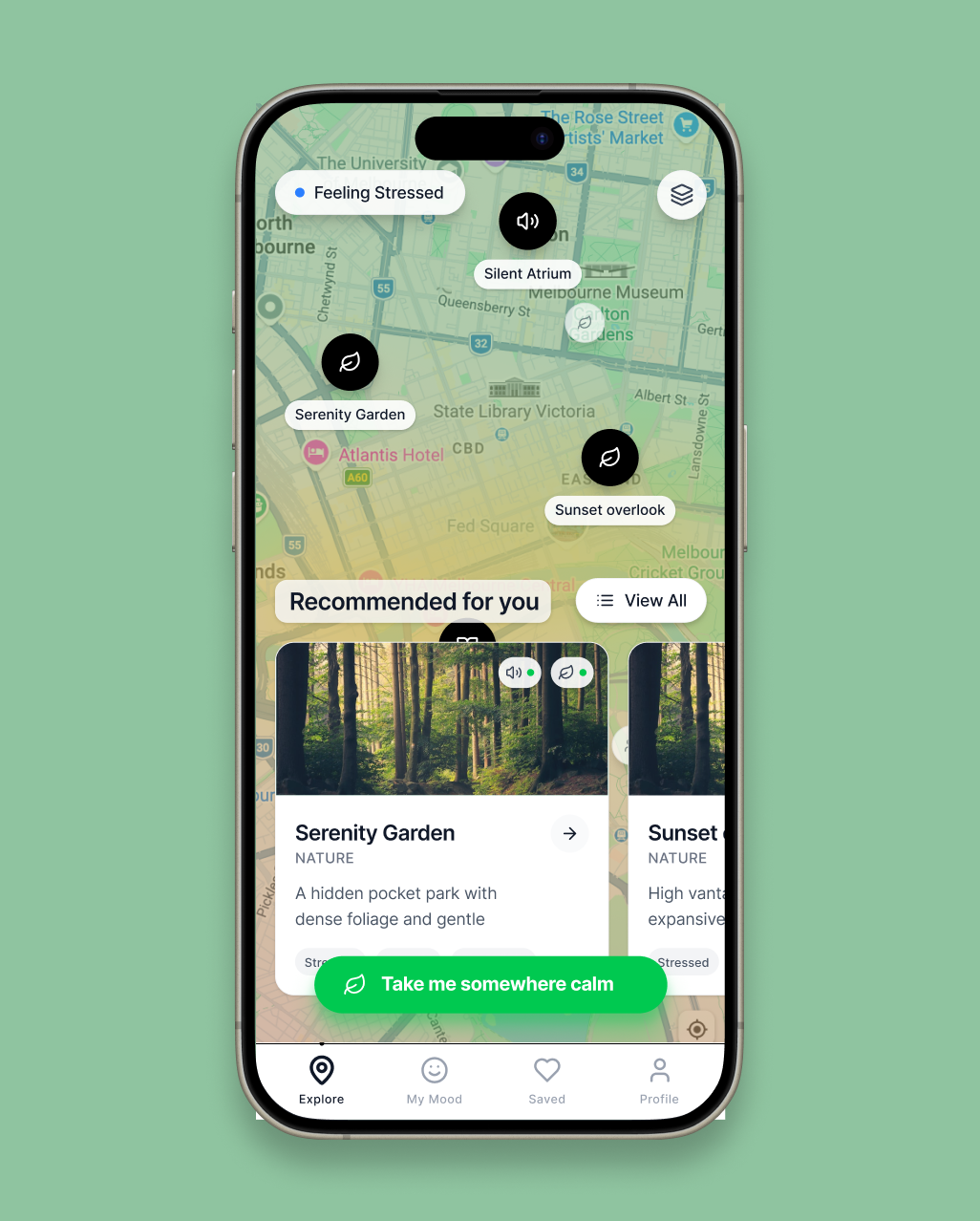
GIS Map Interface
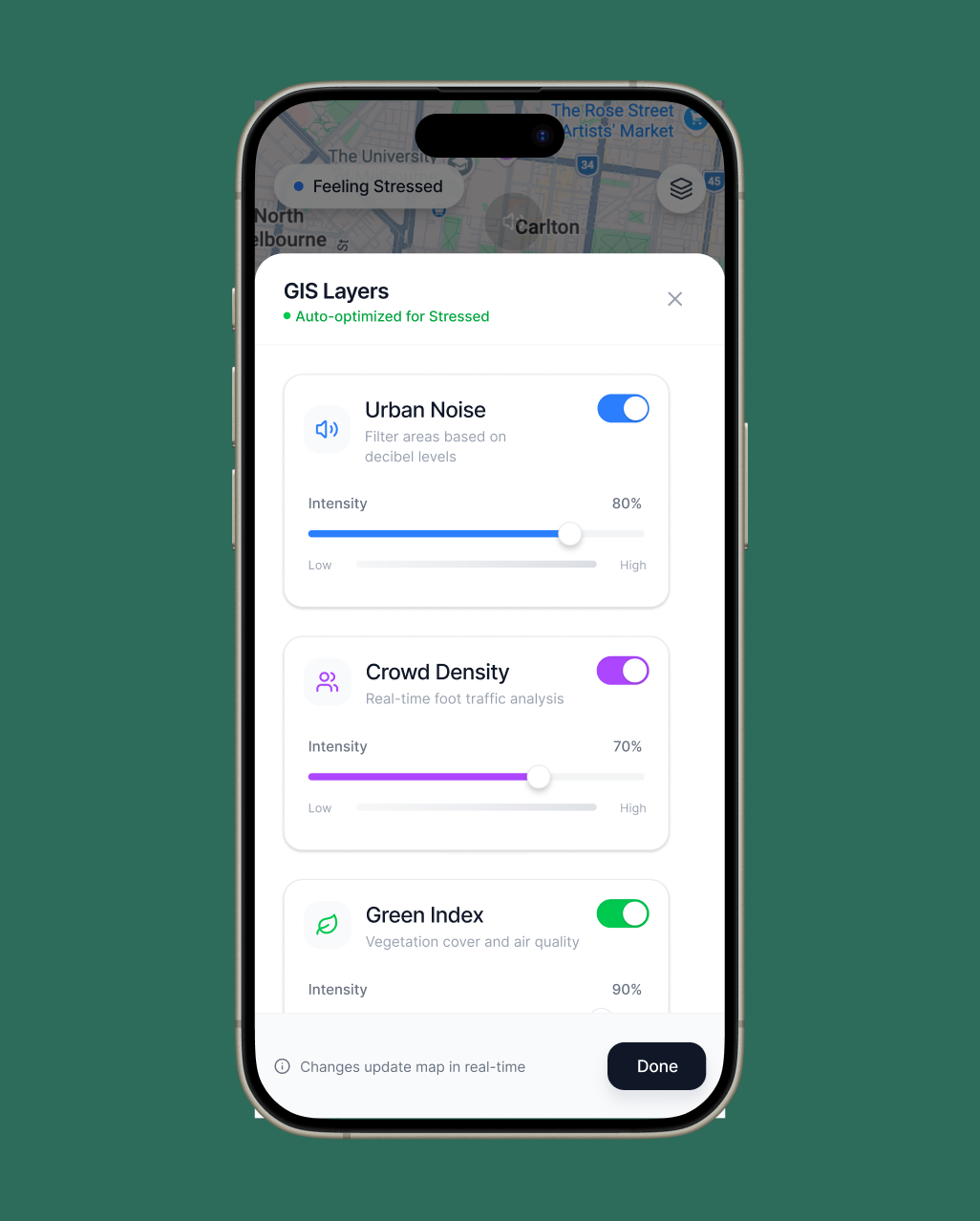
Environmental data becomes visible — noise, density, green space, lighting.
Place Recommendations
Nearby spaces surface based on emotional need, not just proximity.
Adaptive Routes
Walking routes prioritise experiential quality over speed.
Balancing intelligence
with user agency
Environmental layers activate automatically based on emotional input, but users retain full manual control. The city adapts to you — but you always stay in control.
Wellbeing as an integral
layer of navigation
Emotional input is treated as contextual, not diagnostic. The system uses momentary self-reported data only — avoiding pathologisation of everyday emotional states. MoodMaps reflects my belief that UX has a critical role in translating environmental infrastructure into experiences that actively support human wellbeing.
Read the full article on Medium ↗